Why student life is a uniquely hard setting
Most advice on quitting assumes a fairly structured day: fixed working hours, a commute, defined boundaries between work and rest. Student life, especially during exams, has almost none of that. Your schedule is self-directed, your stress is high and irregular, your sleep is often already broken, and long stretches of study naturally happen alone with a device in front of you.
None of that is a character flaw. It is simply a set of conditions that happens to overlap heavily with the conditions a habit like this exploits: boredom, fatigue, stress, and solitude, all at once, for hours at a stretch.
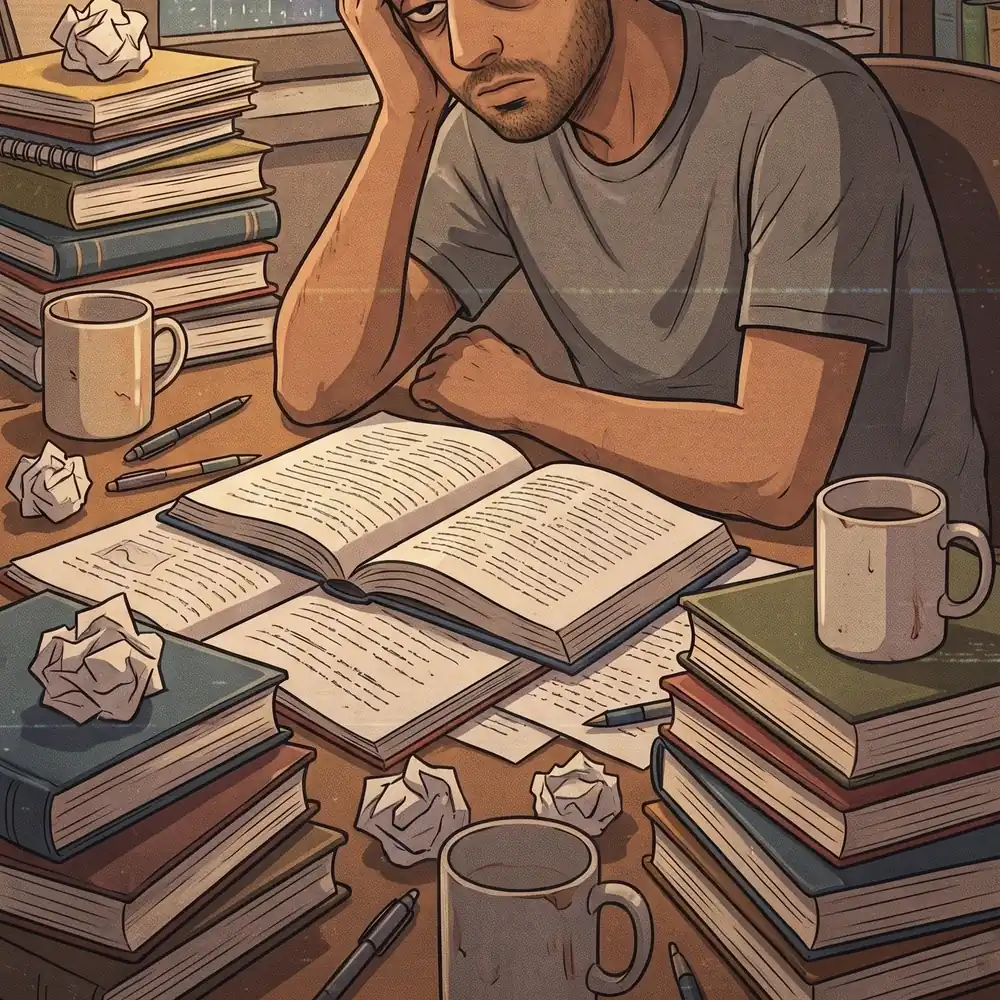
Stress is the trigger nobody names
The connection between exam stress and relapse is rarely stated plainly, so it is worth saying directly: for a lot of people, this habit was never primarily about desire. It was a way to regulate an overloaded nervous system, a quick escape from pressure that offered a few minutes of relief. Exam season manufactures exactly that pressure in bulk.
Recognising this changes the plan. If the trigger is stress relief rather than desire, the fix is not more willpower during the study session, it is a real stress-relief substitute available in the same moment the urge would normally arrive.
The reframe that helps most students: you are not failing at resisting temptation. You are managing acute stress with a tool that also happens to do serious damage. Swap the tool, and a great deal of the daily struggle disappears with it.
Setting up a revision session properly
- Put a blocker on the device you study with. This matters more here than almost anywhere else, because the phone is not incidental to your day, it is the primary tool you work on. Qlean closes explicit content the moment it appears, across every app, so a stress-driven scroll cannot turn into anything worse.
- Study in shared, visible spaces when you can. A library, a common room, a group revision session. This is not about surveillance, it is the same mechanism covered in quitting without privacy: presence of other people removes the condition the habit depends on.
- Break study into timed blocks with a real break in between. Long unbroken stretches are where drift happens. A short, planned break every 45 to 60 minutes gives the restlessness somewhere to go before it finds its own outlet.
- Have a five-minute stress reset ready. A walk, some deep breathing, a few minutes of Mind Reset in the app. The point is to have something faster than the habit, because if the habit is the quickest source of relief available, it wins by default.
Guard the device you study on
Your phone is not a distraction from studying, it is often part of the workflow, which makes it the exact place a stressed, tired mind will drift. Qlean closes explicit content the moment it appears, across every app.
Get Qlean on Google PlayHostels, shared rooms and late nights
Late-night study sessions, an empty room once a roommate has gone home, or the opposite problem of never having privacy, all show up constantly in student life. The specific mechanics of a shared room are covered fully in quitting without privacy, and the mechanics of odd hours and travel in handling triggers while travelling or alone. Both apply directly here.
One addition specific to exam season: the night before an exam is a uniquely high-risk window, because anxiety is at its peak and sleep is already compromised. Plan that specific night in advance rather than trusting yourself to handle it as it comes.
Sleep is not optional during exams
The instinct to sacrifice sleep for revision is common and usually counterproductive on both fronts: exhausted study is inefficient, and exhaustion is one of the strongest relapse triggers there is. Our piece on sleep and recovery covers why protecting sleep, even during exams, is a genuinely strategic decision rather than a luxury you cannot afford.
After the exam ends
The period right after exams carries its own risk that is easy to miss. Weeks of tight discipline suddenly end, stress drops, and free time opens up all at once, often with a feeling of having earned a reward. That combination, sudden freedom plus a sense of deserving release, is exactly when a lot of people undo weeks of consistency in a single evening.
Notice this in advance and treat the days right after exams with the same care as the exam period itself, not as a free pass. Plan something to fill the sudden open time, ideally something physical; our piece on exercise as an outlet is a good place to redirect that first burst of freedom.
The version of this that actually works
You do not need a perfect system for the whole term. You need a plan for the specific hours where study, stress and solitude overlap, which for most students is late evening and the days immediately before an exam. Guard the device, protect your sleep, have a faster stress reset than the habit, and treat the days after the exam with the same care as the days before it. That is a realistic plan for a genuinely difficult stretch of the year, and it works.