Why the standard advice does not fit
Almost every guide on this topic, including parts of our own, quietly assumes a particular life: a private bedroom, a phone nobody else touches, and a partner or friend you can be honest with. If you live in a shared room, a hostel, or a joint family home, that advice runs into a wall immediately. Charge your phone in another room, when there is no other room. Talk to someone, when the people around you are the last people you could tell.
This is worth naming rather than glossing over, because the mismatch makes people conclude they are failing at something straightforward. They are not. They are trying to apply a method built for different circumstances, and it needs adapting rather than more willpower.
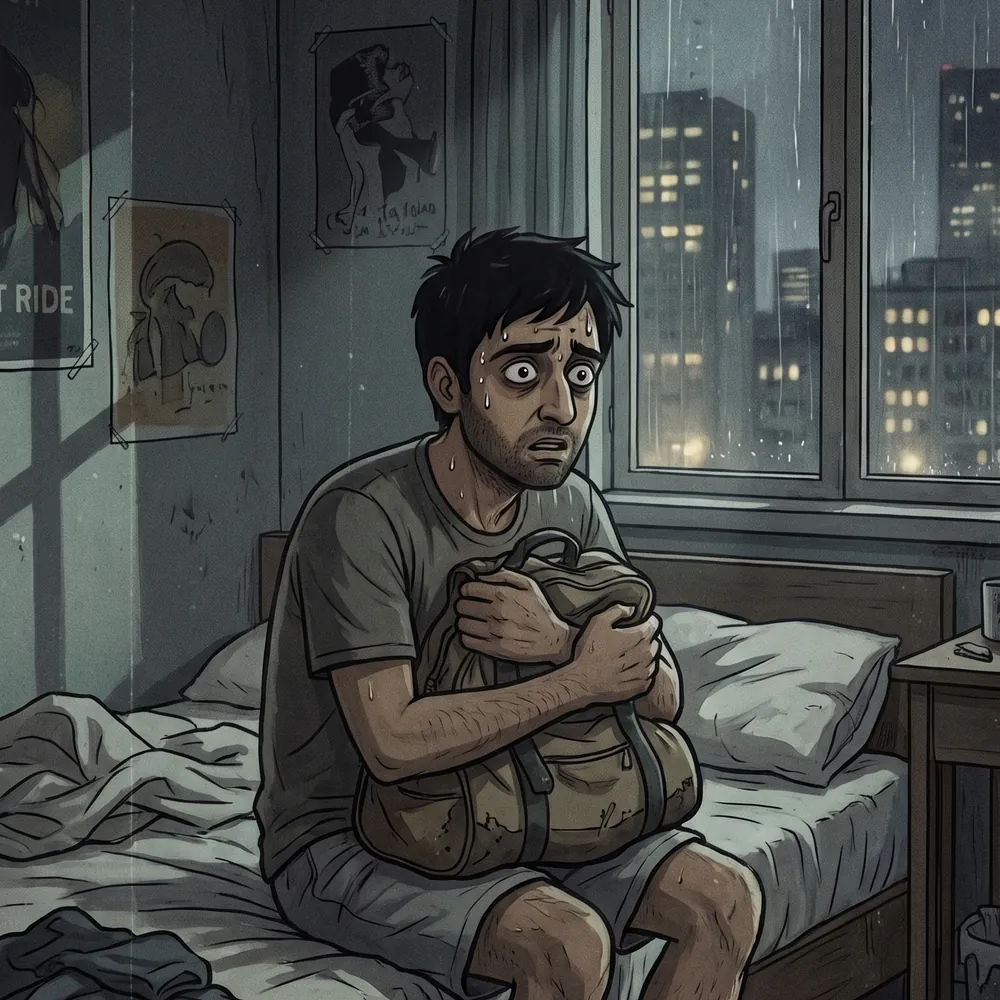
The hidden advantage you already have
Start with the good news, because it is real and rarely pointed out. Compulsive habits need privacy. Almost all of them run on being unobserved. If you share a room, you have already lost the main condition the habit depends on, which is why people in shared living situations often relapse far less frequently than they expect.
What this means practically: your risk is not spread evenly through the day. It is concentrated into a small number of specific windows, late at night when others are asleep, a locked bathroom, an empty house on an unusual afternoon. That concentration is a gift, because a small number of predictable windows can be defended properly in a way that a whole open day cannot.
The reframe: you do not need to control your environment. You need to identify the two or three moments where solitude actually happens and prepare specifically for those. Everything else is already covered by the presence of other people.
Your phone is the part you do control
You may not control the room, but the device is almost always yours alone, and it is where the habit actually lives. That makes it the highest-leverage thing available to you.
- Put a blocker on it. This matters more for you than for someone with a private room, because you cannot rely on environmental friction. Software friction replaces the physical friction you do not have. This is exactly what Qlean was built for, closing explicit content the moment it appears rather than trusting you to resist at 1am.
- Move the charger, even a metre. If there is no other room, charging across the room instead of beside your bed still helps. The friction is smaller but so is the moment you are guarding against.
- Cut the feeds that deliver triggers. Most exposure now arrives through ordinary apps rather than porn sites, which our piece on social media's reward loop covers. Reducing that reduces how often the urge even starts.
The guard that does not need a private room
When you cannot change your environment, change what reaches you through it. Qlean closes explicit content the moment it appears on your phone, across every app, in whatever room you happen to be in.
Get Qlean on Google PlayAccountability without telling your family
The advice to find an accountability partner assumes there is someone nearby you could tell. In a joint family or a conservative household, that is often not the case, and pretending otherwise is not useful. But accountability does not have to be local or familial.
- Someone outside the home. A close friend from college, a cousin you trust, someone who does not live in the house. Distance can make honesty easier rather than harder.
- An online community. Anonymous recovery spaces exist precisely for people who cannot speak openly where they live. The anonymity that feels like a compromise is actually the feature.
- A mentor or counsellor. A faith leader, a teacher, or a professional operates outside your family dynamic entirely.
- Yourself, visibly. If none of the above is available yet, a streak you can see daily provides a real if lighter form of accountability while you build toward telling someone. Our accountability guide covers moving from one to the other.
Defending the windows you actually have
- Name them honestly. Write down the two or three situations where you are genuinely alone and unobserved. Most people have never done this, and the list is usually shorter than they expect.
- Decide the response in advance. For each window, decide now what you will do instead. Deciding in the moment, alone and tired, is exactly the condition under which decisions go badly.
- Shorten the window where possible. Sleeping at the same time as everyone else rather than staying up an extra hour removes the most common one entirely.
- Have an urge plan. When one does arrive, you need something better than resistance. Our guide to urge surfing is the technique for exactly that moment.
Your circumstances make some of the usual advice impossible and some of it unnecessary. What remains is a smaller, sharper version of the same practice: control the device, know your windows, prepare your response, find one person somewhere who knows. That is enough. It has been enough for a great many people living exactly as you do, and the fact that nobody writes about it does not mean it cannot be done. If your specific version of this is a hostel or exam-season revision schedule, staying clean through exam season covers that setting directly.