Why these situations are genuinely harder
It is worth understanding what actually changes, because it is not that your willpower mysteriously weakens. What changes is that every external support your practice quietly relied on gets removed at once.
Your routine is gone, so the empty hours reappear. The people who would notice are absent, which removes the accountability you were not consciously counting on. The environment is unfamiliar, so all the small frictions you had built at home no longer exist. And travel usually damages sleep, which measurably reduces impulse control, as our piece on sleep and recovery covers. Four supports removed simultaneously, and the same person is expected to hold the line on resolve alone.
The key insight: these situations do not require more willpower. They require preparation done in advance, while you are calm and at home, because the whole problem is that the moment itself arrives with your defences already stripped away.
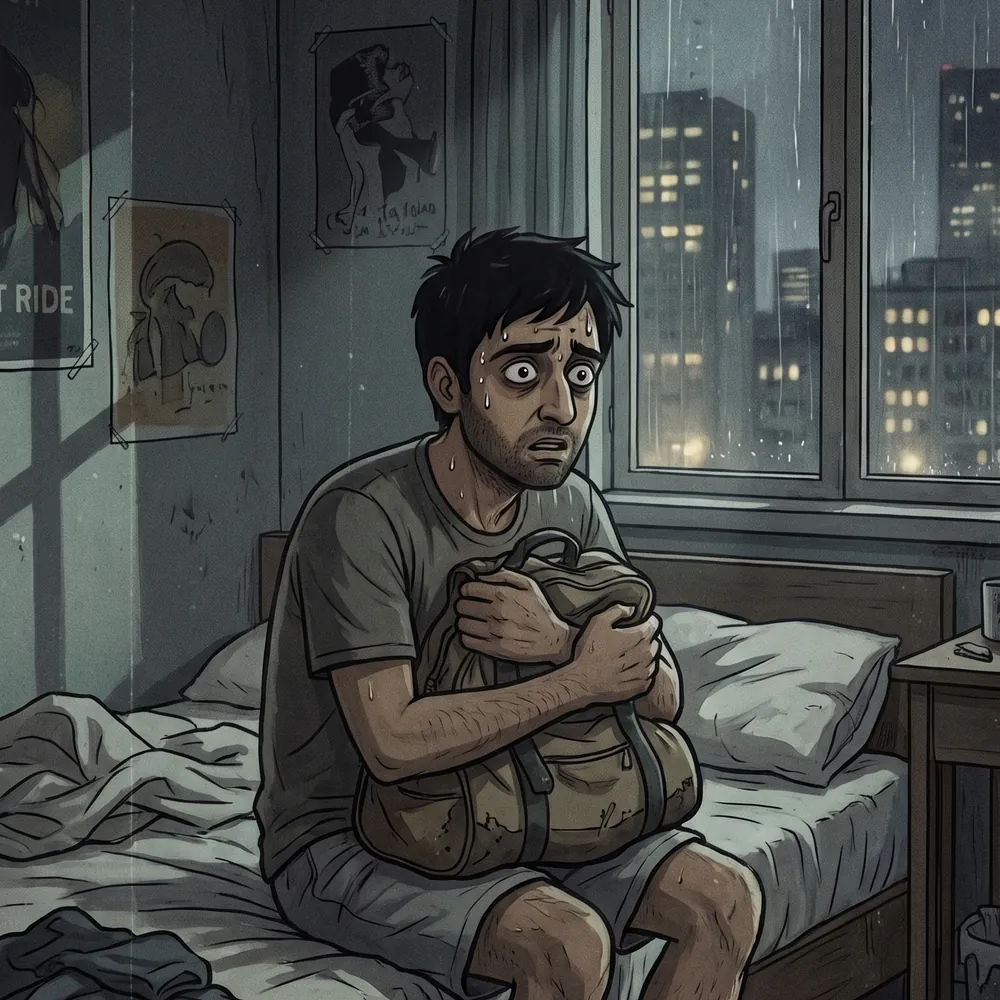
Travel and hotel rooms
- Prepare the night before you leave. Check your blocker is active on every device you are taking. This is a five-minute job at home and impossible to do well at 1am in an unfamiliar room.
- Decide where the phone charges. Across the room, not on the bedside table. Deciding this in advance means you are not negotiating with yourself while tired.
- Plan the evenings, do not leave them open. An unstructured evening in a hotel is the single highest-risk block of time in most trips. Even a loose plan, a walk, a call home, a gym session, closes the gap.
- Tell your accountability partner your dates. Knowing someone will ask how the trip went restores the one support travel most reliably removes. Our accountability guide covers setting this up properly.
An empty house
Long stretches alone at home are deceptively risky because everything is familiar, so it does not feel like a high-risk situation the way travel does. But the mechanism is identical: unstructured time plus privacy plus nobody to notice. The opposite situation has its own difficulties, which our piece on quitting when you share a room works through.
- Get out of the house for part of it. The risk concentrates in long unbroken solitude indoors. Breaking it up matters more than what you actually do.
- Schedule the high-risk hours specifically. Most people know exactly which part of the day is dangerous for them. Put something in that slot deliberately rather than hoping.
- Keep the normal routine anyway. Same wake time, same meals, same evening wind-down, even with nobody watching. Routine is doing more work than it appears to.
The one support that travels with you
Routine, people and environment all disappear when you leave home. Qlean does not - it closes explicit content the moment it appears on your phone, across every app, wherever you happen to be.
Get Qlean on Google PlayOther predictable danger zones
- After a late night out. Tired, disinhibited and alone is a common combination for a slip. Decide in advance that you go straight to sleep, phone across the room.
- The first week of a broken routine. A new job, a move, a holiday. Rebuild the anchors quickly rather than waiting for things to settle naturally.
- Emotional lows. Rejection, conflict, a bad day at work. The habit was often a coping tool, and low moods are exactly when it reasserts itself. Having a planned alternative response matters most here, which is what urge surfing is built for.
None of this is about becoming someone who never encounters risky situations. It is about noticing that these particular situations are predictable, which means they can be prepared for, which means they stop being the thing that quietly ends every attempt. Prepare while you are calm. Your future self, tired in an unfamiliar room, will be running on whatever you set up today. Revision weeks bring a version of this same unpredictability; staying clean through exam season covers it specifically.