A thought you already know
You've had it. Everyone attempting this has had it, usually more than once a week in the early going. It doesn't arrive as a demand, it arrives as a suggestion, delivered in a calm, almost caring tone, as if it's looking out for you. Just this once. You've earned it. Tomorrow you'll be stronger anyway.
What makes it dangerous isn't volume, it's plausibility. A loud craving is easy to identify as the enemy. A quiet, reasonable-sounding negotiation is much harder to catch, because it doesn't feel like the habit talking. It feels like you, being sensible.
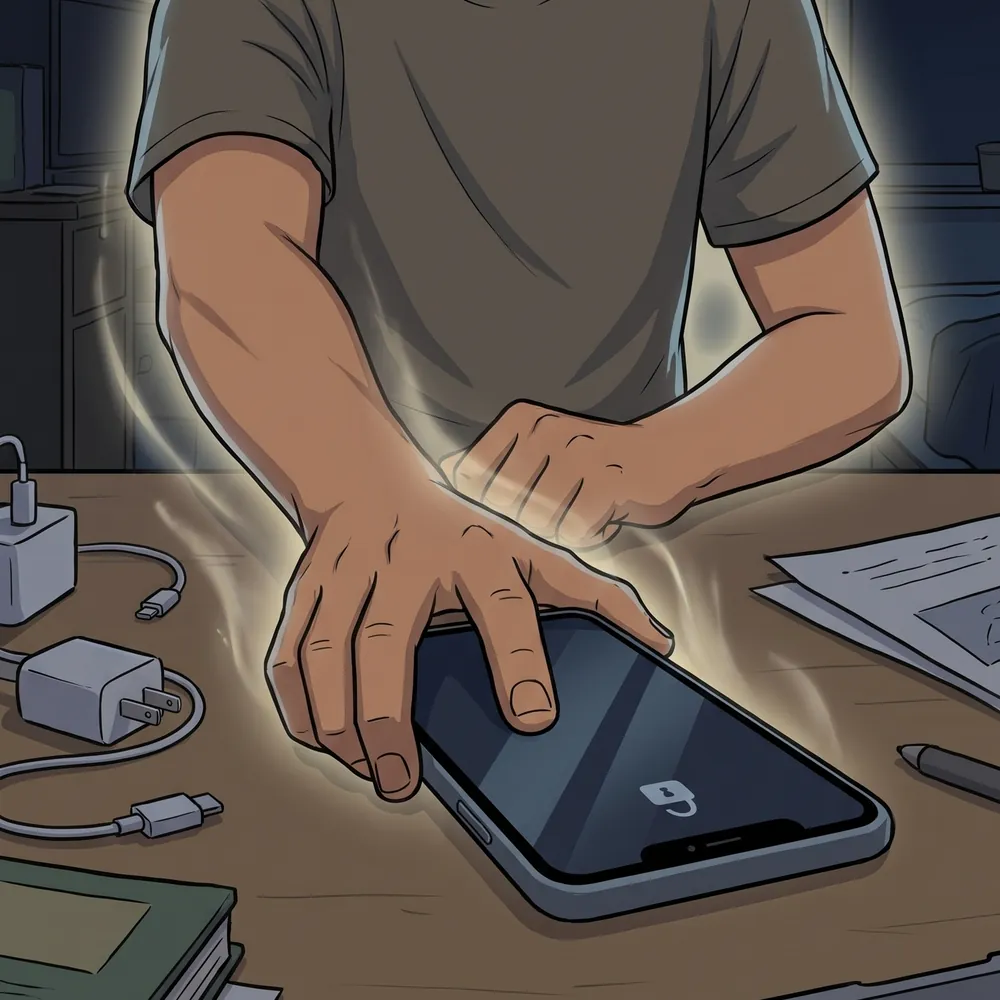
Where the lie actually is
The claim has two parts, and both are false, though for different reasons.
"It won't matter." This treats the moment as isolated, disconnected from everything around it. It isn't. A relapse doesn't just cost the specific minutes it takes. It reopens a neural pathway that was going quiet, and the next urge after a slip is reliably stronger than the one before it, not weaker. One exception rarely stays one exception.
"I'll start again tomorrow." This one is subtler and more damaging, because it's sometimes even true, and that's exactly the problem. You probably will start again tomorrow. But "starting again" quietly becomes the actual habit, a loop of always being about to be disciplined rather than actually being disciplined, and a person can live inside that loop for years without ever noticing they never left it.
The tell to watch for: the thought almost never says "I want this." It says "this one time is fine." If you notice yourself negotiating terms rather than admitting desire, that negotiation is the thing to interrupt, not the desire underneath it.
Interrupting it before it wins
- Name it out loud, even just in your head. "This is the just-this-once thought" breaks its disguise immediately. It only works while it's pretending to be your own reasonable voice.
- Give it a fixed reply, decided in advance. Something like "I already decided this. There's no version of tonight where this is a good idea." Deciding the answer ahead of time means you're not negotiating from scratch at 11pm when you're tired and the thought has the advantage.
- Move your body immediately. Stand up, leave the room, do something physical. The thought loses most of its pull the moment your attention shifts somewhere else, and twenty seconds of movement does that better than trying to out-argue it.
- Remember the last time it lied. It has made this exact promise before, and the promise was never kept. That memory, specific and recent, is more convincing in the moment than any general resolve.
Remove the option the thought is arguing for
The thought works best when the door is actually open. Qlean closes explicit content the moment it appears on your phone, across every app, so "just this once" has nowhere left to go.
Get Qlean on Google PlayWhen the thought is loudest
It shows up most reliably at the exact moments this whole site keeps returning to: late at night, after a stressful day, alone, tired, bored. That overlap isn't a coincidence. The thought is a symptom of the same conditions that produce every other kind of vulnerability, which is why the fixes are also the same ones covered throughout this journal, structure the evening, protect your sleep, and have a real plan for the urge itself, which our guide to urge surfing covers directly.
If it already won tonight
Then it won, and the next move is the same one it always is: no spiral, no extended punishment, just an honest look at what let it in, and a restart tomorrow that doesn't wait for a clean feeling first. Our guide on recovering from a relapse covers exactly that. The thought will be back. Recognising it a little faster each time is most of what actually changes. Its earlier cousin, the thought that keeps someone from starting at all, is covered in the excuses that keep people from ever starting.