Why this needs to be done by name
Most writing on this topic either overstates the benefits to sell a lifestyle or understates them to sound scientifically respectable. We have argued throughout this site for full celibacy on real grounds: discipline, presence, freedom from a compulsive habit, and traditions with centuries of experience behind them. None of that requires inflating claims that do not hold up, and a strong case does not need weak evidence propping it up. Naming the specific bad claims directly is more useful than vaguely gesturing at "some exaggeration out there."
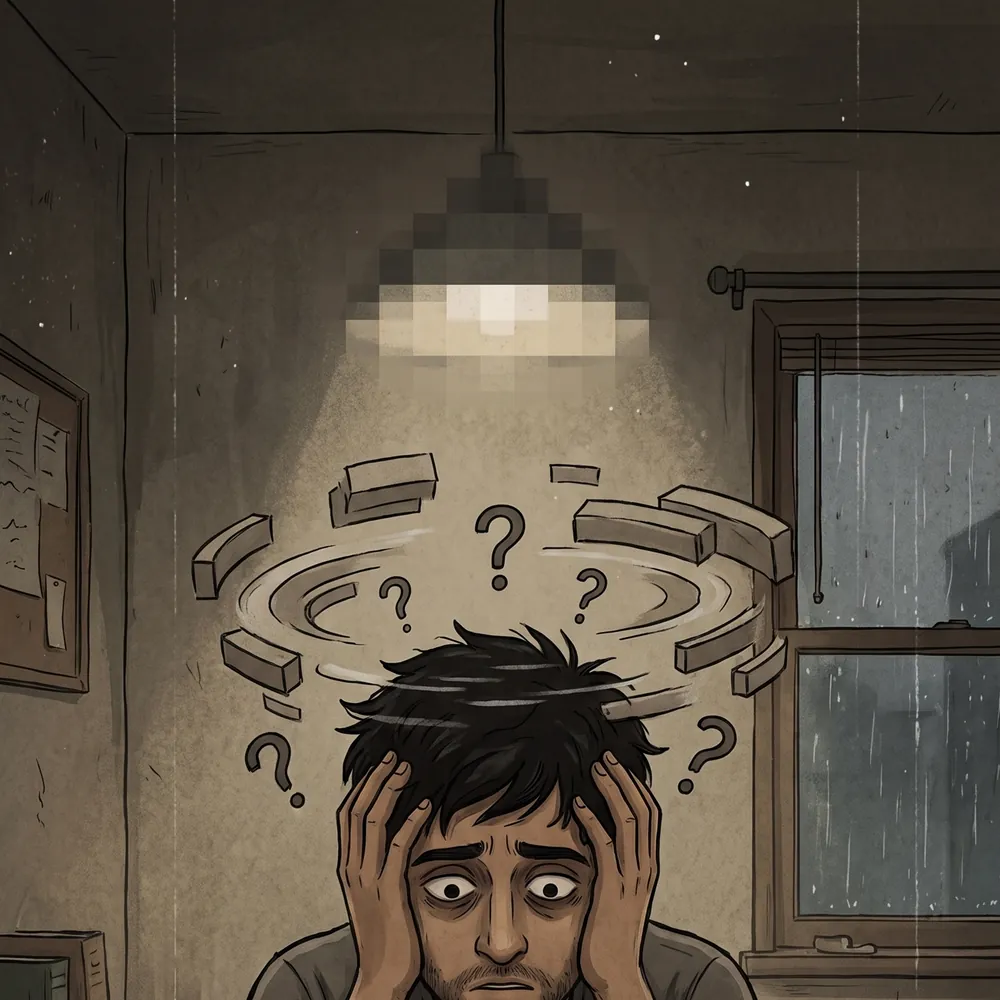
Myth: quitting gives you superhuman testosterone, strength or looks
This is the most widely circulated claim and the least supported. Controlled research on ejaculation and testosterone shows no meaningful sustained rise from abstinence beyond a very brief and modest spike after about a week, which then returns to baseline. It does not produce dramatically increased muscle, a visibly different face, or any of the transformation before-and-after posts imply.
What does genuinely change, and what actually accounts for people looking and feeling different, is real and worth stating honestly: better sleep, reduced time spent on a phone, redirected energy into exercise, and improved mood and confidence. Those changes are meaningful. They are not hormonal magic, and pretending they are sets people up to feel cheated when the fictional version does not arrive.
Myth: nightfall causes weakness, memory loss or illness
This claim circulates heavily in parts of South Asia and causes genuine, needless anxiety in young men. It is not supported by any credible medical source. Nightfall is an involuntary release the body performs during sleep and is not evidence of illness, weakness or a failing practice. We cover this in full in nightfall and wet dreams explained, because the fear around this specific myth causes more harm than the actual event ever could.
Worth saying directly: stating a false medical harm as fact, even in service of a cause we believe in, is not a small error. It causes real anxiety in people who read it and believe it, and it hands a legitimate reason for critics to dismiss the entire practice as pseudoscience. The honest version of this argument is also the stronger one.
Myth: porn-induced ED is not real, it is just performance anxiety
This is the opposite kind of myth, dismissive rather than exaggerated, and it is also wrong. There is a real, documented pattern where arousal conditioned to high-novelty, high-stimulation screen content fails to transfer to a lower-stimulation real partner, producing genuine difficulty with a body that has no other physical cause. Clinicians studying this consistently point to abstinence from porn, sustained over weeks to months, as the most reliable path to recovery. We cover the mechanism and the evidence in porn-induced ED recovery. Dismissing this as "just anxiety" is as inaccurate as the myths that overstate quitting's other effects.
Myth: if you feel worse a few weeks in, you are doing something wrong
The opposite is closer to true. A drop in mood, drive and energy several weeks into a streak, commonly called the flatline, is a normal and widely reported phase, not a sign of failure or a signal to give up. It passes. Treating it as evidence the practice is not working is one of the most common reasons people quit quitting right before the phase that would have proven them wrong. See the NoFap flatline explained for the full picture.
The real reason to quit does not need any of these myths
Freedom from a compulsive habit, presence with real people, and a mind that is actually your own, that case stands on its own. Qlean closes explicit content the moment it appears on your phone, across every app, and helps you build the record that proves the real changes to yourself.
Get Qlean on Google PlayMyth: masturbation without porn is completely harmless, so only porn needs to go
This one is popular because it is convenient, and it deserves a direct answer rather than a dodge. Masturbation without porn is certainly less harmful than compulsive porn use, and the two are not identical problems. But treating masturbation as a fully neutral habit misses what a serious brahmacharya-style practice is actually training: mastery of a craving with no external trigger, no app, no image, nothing to blame but the mind itself. Our full case for this is in why quit masturbation too, and it does not rest on masturbation being medically dangerous, only on what the fuller discipline is actually worth.
Myth: 90 days fixes everything permanently
The specific number gets treated like a finish line, and that framing sets people up badly. Real change over weeks and months is well documented and genuinely significant, but there is no fixed day on which the practice becomes permanently automatic and effortless forever. It becomes easier, then much easier, and then requires ongoing, lighter maintenance the way any serious discipline does. Our honest timeline is in benefits of NoFap: a realistic timeline. Treating day 90 as a finish line rather than a genuine milestone is why some people relapse hard immediately after hitting it.
The version that actually holds up
Strip out every exaggerated and every dismissive claim and what remains is still a strong case: this habit is compulsive for a great many people, it measurably affects intimacy, sleep, focus and self-respect, and quitting it produces real, well-documented improvements in mood, presence and discipline, alongside centuries of tradition pointing the same direction. That case does not need superpowers or fabricated illness to be worth taking seriously. It is worth taking seriously exactly as it actually is. Parents navigating this with a teenager will find the same honesty applied directly in your teenager already saw something, now what. And if you are evaluating tools rather than claims, what actually matters in a content blocker applies the same honest standard to that decision. The same honesty applies to timelines; see how long a dopamine reset actually takes for a real answer instead of a suspiciously precise one.