What porn-induced ED actually is
Porn-induced erectile dysfunction, commonly shortened to PIED, describes a specific and increasingly documented pattern: young, physically healthy men who struggle to get or maintain an erection with a real partner, despite having no underlying physical or vascular cause. This condition barely appears in older medical literature, before internet porn was available in the volume and intensity it is today, and clinicians treating young men now report seeing it with real frequency. It is distinct from ED tied to age, cardiovascular disease or other physical causes, and it is one of the more solidly evidenced consequences of heavy porn use in the entire body of research on this topic.
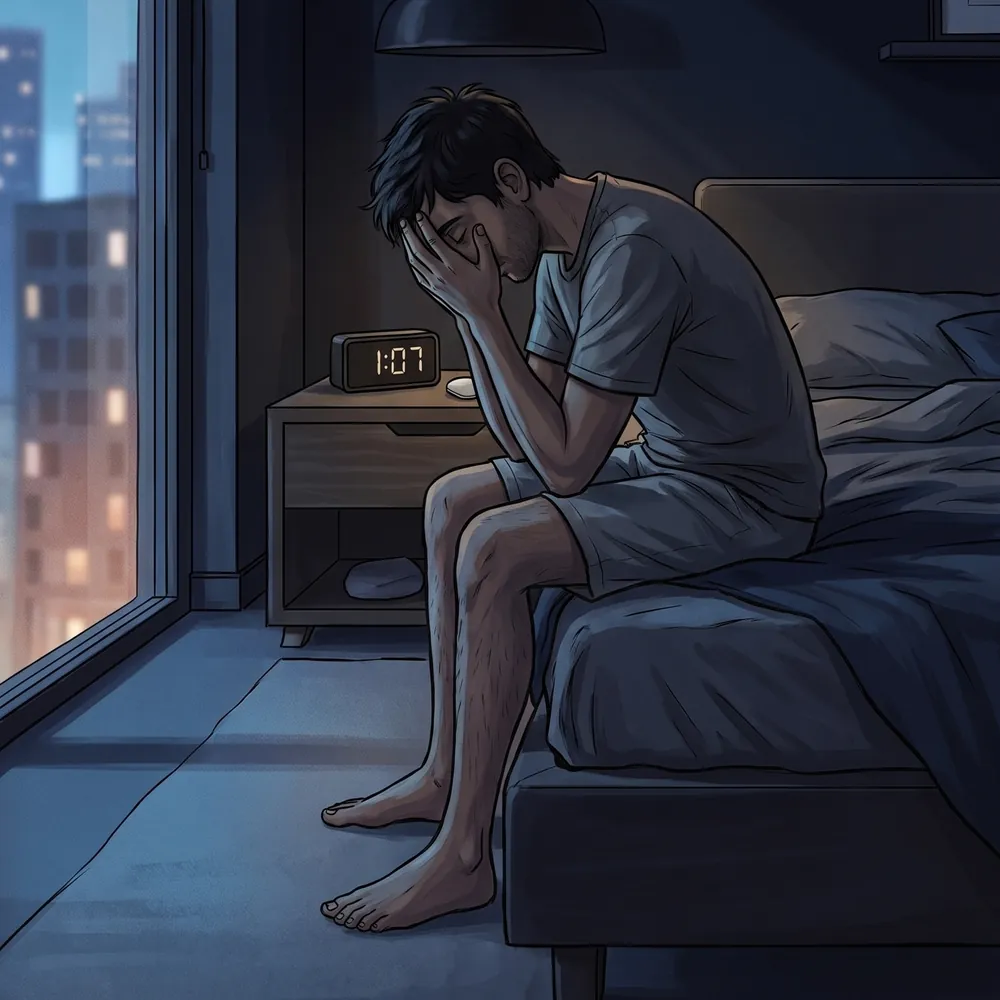
Why it happens
The leading explanation centres on how the brain's arousal response gets trained. Porn delivers a level and type of stimulation, constant novelty, extreme visual intensity, on-demand escalation to more intense content, that no real partner and no real intimate encounter can match. Repeated heavy exposure appears to recalibrate what the body has learned to expect as the baseline for arousal. Faced afterward with the comparatively slower, less visually intense reality of a real partner, the body that has been trained on porn's artificial intensity can struggle to respond. This isn't a character flaw or a sign of disinterest in a partner. It's a trained physiological pattern, and trained patterns can be retrained.
The honest bottom line: if you're a young, healthy man experiencing this, it is very unlikely to be a sign that something is medically wrong with you. It is far more likely a sign of exactly what heavy porn use is documented to do, and the path back runs through quitting it, not through medical intervention aimed at the wrong target.
The recovery path
Clinicians and researchers studying this consistently point toward the same answer: full abstinence from porn, sustained over weeks to months, is the most reliable path to recovery. Reduced use tends to produce weaker, slower results than complete abstinence, because the retraining process needs a genuinely lower-stimulation baseline to work against, and any continued exposure keeps reinforcing the pattern that caused the problem in the first place. This is one of the clearest, most evidence-backed reasons among everything covered on this site to commit to quitting fully rather than cutting back.
Recovery timelines vary. Some men report improvement within a few weeks. More established patterns, built over years of heavy use, commonly take several months of full abstinence before the body's response to real intimacy returns to normal. This is a real, gradual retraining process, not an instant fix, and treating it with the patience it needs matters more than watching the calendar.
Start the retraining process today
Recovery requires genuinely removing the artificial stimulation your body has been trained on. Qlean closes explicit content the moment it appears on your phone, across every app, so the retraining actually has a chance to take hold.
Get Qlean on Google PlayWhat to do alongside quitting
- Commit to full abstinence, not moderation. The evidence here consistently favours complete quitting over cutting back. Our guide on how to quit porn covers the full practical system for doing this successfully.
- Expect a difficult middle stretch. Many men report things feeling worse before they feel better, sometimes called the flatline, before the body's baseline resets and real improvement shows up.
- Talk to a doctor if you're unsure. If you have any doubt about whether a physical or medical cause might be involved, or if the condition is causing you significant distress, a real conversation with a doctor is worthwhile and not something to avoid out of embarrassment.
- Be patient with your body and yourself. This is a retraining process, not a switch that flips overnight. Consistency over months matters more than any single week.
This is not a life sentence, and it is one of the more genuinely hopeful topics covered here precisely because the evidence for recovery through quitting is unusually strong. Commit fully, be patient with the process, and trust that a body trained by a habit can be retrained by removing it. The wider effect on closeness with a partner, beyond the physical mechanics, is covered in what porn does to real intimacy. This condition is sometimes wrongly dismissed as pure anxiety, a claim addressed directly in NoFap myths, named and debunked. If your own history with this runs into decades rather than years, quitting after twenty or thirty years covers what changes at that scale. The reward-circuit mechanism behind this specific pattern is covered in how porn affects the brain.