Why willpower alone doesn't hold
Most attempts to quit masturbation start and end with a single sentence: "I'm just not going to do it anymore." That sentence is sincere, and it's also almost never enough on its own, because it asks your willpower, a genuinely limited resource, to show up at exactly the moment it's weakest: late at night, alone, tired, stressed, with nobody watching and nothing external stopping you. Willpower depletes over the course of a day the same way physical energy does, and the urge doesn't politely wait for a moment when you're well rested and clear-headed. It shows up precisely when your defences are lowest, which is exactly why a plan built entirely around raw willpower keeps failing in the same predictable way.
A real plan doesn't ask you to be strong in the moment. It asks you to be smart in advance, making the important decisions ahead of time, while you're calm and thinking clearly, so there's nothing left to decide once the urge actually arrives. Everything below is built around that single idea. If you haven't yet read the case for why this is worth doing fully, not just cutting back on porn, our piece on why quit masturbation too, not just porn covers the reasoning. This guide picks up where that one leaves off, with the actual mechanics.
Step one: an honest trigger audit
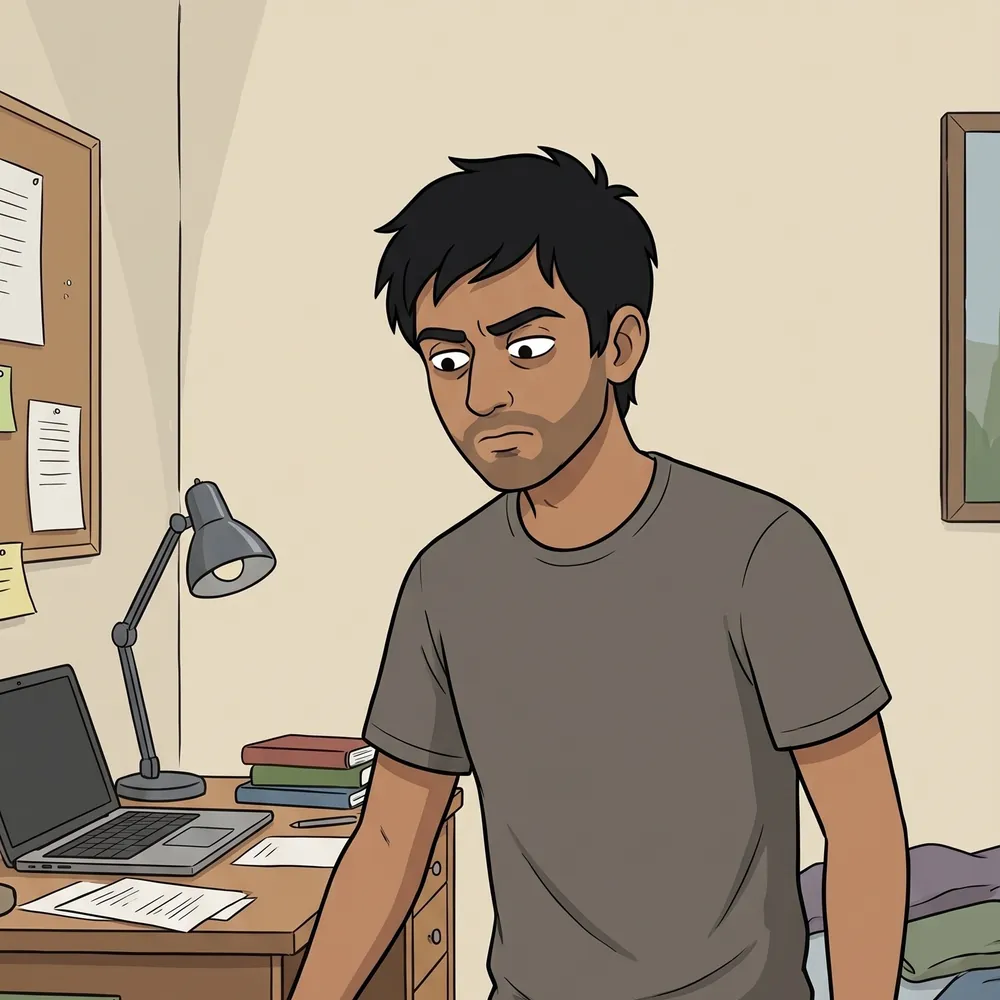
Before you can remove your triggers, you need to actually know what they are, specifically, not in the abstract. For a week, without trying to change anything yet, simply notice and write down what preceded each urge: the time of day, what you'd just been doing, how you were feeling emotionally, whether you were tired, bored, stressed, or lonely. Most people discover their pattern is far narrower than they expected. It's rarely "randomly, all day." It's usually one or two specific windows, the last twenty minutes before sleep, the first few minutes after waking, a particular kind of stress at work, that account for the overwhelming majority of actual instances.
This audit matters because generic advice fails generic problems, and your problem isn't generic. Someone whose pattern is entirely tied to bedtime needs a completely different intervention than someone whose pattern shows up mainly under afternoon work stress. Skipping this step and jumping straight to "just try harder" is exactly why so many first attempts don't hold.
Be honest here about whether porn is actually part of your pattern or not, because the answer changes what step two needs to focus on. If porn is involved even occasionally, closing that door specifically is high leverage. If your pattern runs entirely on memory, fantasy, or idle time without any screen involved, the environmental engineering in the next step needs to focus on structuring time rather than blocking content, since there's no content to block.
Step two: engineer the environment, not just the intention
Once you know your specific windows, the next move is changing what's physically and practically available to you during them, rather than relying on remembering your intention in the moment. If your trigger window is right before sleep, that might mean charging your phone outside the bedroom, keeping a book on the nightstand instead, or simply committing to being genuinely tired enough to fall asleep quickly once you lie down. If porn is part of your pattern at all, closing that door specifically removes the fastest-escalating piece of the whole sequence.
This is also where a real content blocker earns its place in the plan, not as the whole solution, but as one less thing your willpower has to fight in a moment it's already struggling. Qlean closes explicit content the moment it appears on your phone, across every app, which matters here because even a habit that's mostly internally triggered often gets an occasional boost from an image or video stumbled across by accident. Removing that possibility removes one more variable you'd otherwise have to manage through willpower alone.
For the windows that have nothing to do with a screen, environmental engineering looks different but works on the same principle: reduce the unstructured time in which the urge has room to operate. If your danger window is the last twenty minutes before sleep, having a book already on the nightstand and your phone already charging in another room removes two decisions you'd otherwise have to make correctly, in a row, while tired. Pre-deciding removes far more failure points than trying to decide well in the moment ever does.
Remove one variable from the fight
You shouldn't have to out-willpower a screen that's actively working to hold your attention. Qlean closes explicit content the moment it appears on your phone, across every app, so your discipline has one less thing to fight.
Get Qlean on Google PlayStep three: what to do in the actual moment
Even with a good environment set up, the urge will still show up sometimes. This is where a specific, physical, pre-decided response matters more than any amount of thinking. When you notice arousal building, the single most effective move is to physically interrupt it: stand up if you're sitting, leave the room you're in, splash cold water on your face, do twenty pushups, anything that shifts your body out of the passive state the urge is thriving in. This works because urges are time-limited. They rise, peak, and fall, usually within a few minutes, whether or not you act on them. Interrupting the moment physically buys you exactly enough time to reach the other side of that peak without having made a decision you'd regret.
Trying to talk yourself out of it purely in your head, arguing internally with the urge, tends to fail, because you're negotiating on the urge's home turf. Moving your body changes the terrain entirely, and that's precisely why it works better than pure mental effort.
It helps to decide your specific physical response in advance, before you need it, rather than improvising in the moment. Pick one or two concrete actions now, standing up and doing ten pushups, walking to another room and running cold water over your hands, whatever genuinely interrupts your particular state, and rehearse the decision mentally so it's already familiar when the actual moment arrives. An urge caught early, in the first few seconds, is far easier to walk away from than one you've already been sitting with for several minutes.
A five-second rule worth adopting: the moment you notice the urge, move within five seconds, before you've had time to think it through or negotiate with yourself. The delay is where the negotiation happens. Removing the delay removes the negotiation.
Step four: replace the function, not just remove the act
If the habit has been quietly answering boredom, stress, loneliness, or simply filling idle time, removing the act without replacing what it was doing for you leaves a real gap, and gaps get filled one way or another. Look honestly at what the habit was actually giving you emotionally in each of your identified trigger windows, and build something real into that same window instead. If it was managing stress, that might be a short walk, a call to someone you trust, or simply naming the stress out loud rather than routing it through the habit. If it was filling boredom, having something genuinely engaging ready to reach for, not as a distraction but as a real replacement, matters more than most people expect going in.
This is also where redirecting the conserved energy toward something constructive, training, study, prayer, creative work, tends to matter more than pure suppression ever does. The traditions that treat retention as a serious discipline never asked practitioners to simply deny the energy and leave a hole where it used to go. They asked for it to be channelled somewhere real, and that channelling is often the difference between a practice that feels like constant restriction and one that feels like genuine forward motion.
Step five: build in real accountability
Trying to hold this entirely alone, with nobody aware of the effort, removes one of the most effective tools available: the simple fact of another person knowing. Whether that's a trusted friend, a partner, or a structured accountability system, having someone to actually report to changes the calculus of a weak moment in a way private willpower alone doesn't. It's harder to quietly let yourself off the hook when someone else is expecting an honest answer.
Full retention as the target, rather than "cutting back," makes this accountability simpler to hold too, because there's only one honest question to answer, not a list of exceptions to explain away. "Did I hold the standard today" is a question you can answer truthfully in one word. A partial standard invites a paragraph of justification instead, and paragraphs of justification are exactly where accountability quietly erodes.
Choose accountability that actually has teeth, not just good intentions on both sides. A weekly check-in with a specific, agreed question, rather than a vague "how's it going," gives the other person something concrete to actually hold you to, and gives you something concrete to actually prepare an honest answer for. Vague accountability produces vague honesty. Specific accountability produces specific honesty, and specific honesty is what actually changes behaviour over time.
What to actually expect
Most people notice the urge genuinely losing some of its grip within the first few weeks of consistent practice, though the exact pace varies by person and by how long the habit has been running. Early days are usually the hardest, since the old pattern is still fresh and the new structure hasn't had time to become automatic yet. That difficulty is normal, not a sign the plan isn't working. What matters is consistency across the plan as a whole, not perfection on any single day. Keep the trigger audit honest, keep the environment engineered, keep the in-the-moment response ready, and keep someone else in the loop. That combination, held over time, is what actually gets people to the other side of this, not any single piece of it alone.
Setbacks along the way are common enough that you should plan for the possibility now, rather than being blindsided by it later. If you do slip, our guide on relapsing after quitting masturbation covers exactly what to do next, and how to keep a single slip from unravelling weeks of real, honest progress. The plan above doesn't promise a perfectly straight line. It promises a structure that keeps working even after an imperfect week.