Why this group gets overlooked
Almost every mainstream resource on quitting compulsive sexual behaviour assumes porn is somewhere in the picture, because porn is the visible, blockable, googleable part of the problem. Blockers exist specifically for it. Accountability apps flag it by name. Entire communities are built around counting porn-free days as the primary metric of progress. If your habit runs entirely on internal triggers, with no screen involved at any point, none of that infrastructure was built with you in mind, and it's genuinely easy to conclude that your situation doesn't really count, or that you're not dealing with "a real problem" because there's no video history anyone could point to as evidence.
I want to say this plainly, because I don't think it gets said often enough: it counts. The behaviour you're actually trying to change, deliberate arousal followed by release, at a frequency that's started running your day instead of the other way around, is the same behaviour regardless of what happens to start it. A habit doesn't become less real just because it's harder to point a finger at.
I'd also gently push back on a second assumption I see people make about themselves in this exact position, which is that because there's no porn involved, the underlying cause must be purely physical, just a body with a strong drive, nothing psychological going on. That's rarely the full picture. The same emotional patterns that drive porn-based habits, using arousal to escape stress, to fill boredom, to self-soothe after a bad day, show up here just as often. Removing porn from the equation doesn't remove the emotional wiring underneath it. It just removes one possible costume the habit was wearing.
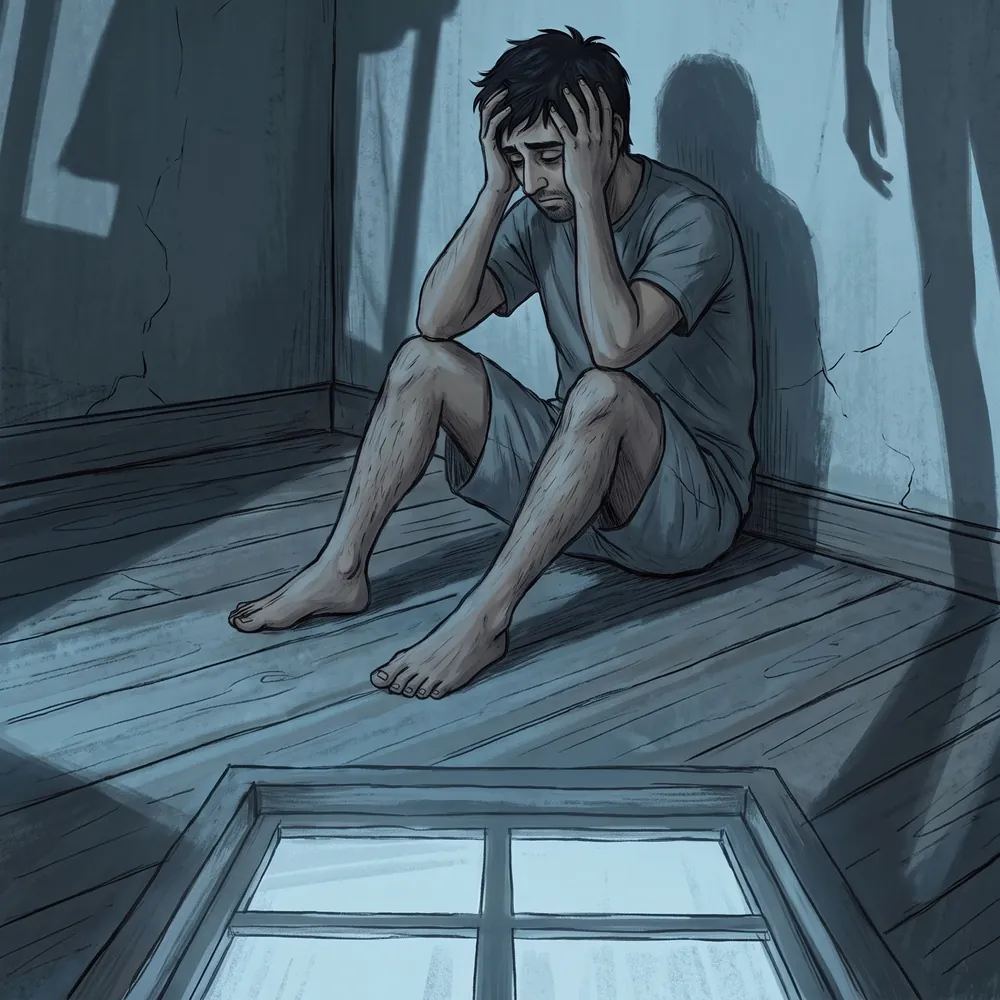
What actually triggers masturbation without porn
Without an external screen doing the escalation work, the common triggers tend to be internal and situational rather than something you stumbled across:
- Idle time. Lying in bed before sleep, waking up before an alarm, a long shower, any stretch of time with nothing else actively demanding your attention.
- Memory and fantasy. A past experience or an imagined scenario the mind keeps returning to on its own, sometimes without any obvious prompt at all.
- Physical sensation. Waking arousal, tight clothing, a body that's simply noticed its own state and made that noticing hard to ignore.
- Emotional discomfort. Stress, loneliness, or boredom that the habit has quietly learned to answer with physical release, the same way another person might reach for food or a drink.
None of these require a phone anywhere near you. That's precisely why blocking apps and screen-time tools, genuinely useful as they are for porn specifically, don't solve this particular version of the problem on their own, no matter how well they're built.
It's worth sitting with each of these for a moment rather than skimming past the list, because most people in this situation are actually driven by one or two of them specifically, not all four evenly. Someone whose pattern is almost entirely tied to the hour before sleep is fighting a very different battle than someone whose pattern shows up mainly under work stress in the middle of the afternoon. Knowing which one or two categories actually describe your own pattern is the first real step, because it tells you exactly where to put the structural changes covered next, rather than spreading effort thin across a whole day that isn't equally risky.
A different strategy: from blocking access to structuring time
Since there's no external trigger sitting there to remove, the practical lever available to you is different: reduce the unstructured time in which the internal trigger actually has room to operate. This isn't about filling every single hour of your day out of fear of what might happen in a gap. It's about honestly noticing which specific windows are the ones where the habit actually shows up, usually the same one or two moments each day, and putting something deliberate into that window instead of leaving it sitting open.
If it's the last twenty minutes before sleep, that's the window worth protecting directly: reading, a short walk, anything that keeps your hands and attention occupied until you're genuinely tired enough to fall asleep quickly once you lie down. If it's the first few minutes right after waking, getting out of bed immediately, before the mind has had time to wander anywhere, removes the opportunity almost entirely before it can start. This kind of structure is exactly what our guide on building a healthy daily routine walks through in full, and it applies just as directly here as it does to a porn-driven habit.
If your trigger is stress rather than boredom or idle time specifically, structuring the window looks a little different. Instead of filling the time with an activity, the more effective move is often addressing the stress itself before it reaches the point where your habit is the only relief valve you've built for it. A short walk, a conversation with someone you trust, even five minutes of simply naming what's actually stressing you out on paper, can do more than any amount of willpower applied after the fact, once the urge has already started building.
A small but useful habit: name your one or two actual trigger windows out loud to yourself, specifically, rather than treating the whole day as equally risky. Most people find the danger is concentrated in a narrow stretch of time, not spread evenly across sixteen waking hours, and knowing exactly where to focus your structure makes the whole plan far less exhausting to hold.
Handling fantasy without a screen to blame
The hardest part of this version of quitting is that the trigger lives inside your own head, and there's no browser history to delete, no app to uninstall, no blocker to install on your own imagination. What you can actually practise is noticing the exact moment a passing thought turns into a chosen one, the shift from a fantasy simply crossing your mind to a fantasy you're deliberately building on, adding detail to, staying with on purpose. Our guide to the urge surfing technique covers the practical method for riding that specific moment out without acting on it, and it's worth learning specifically for this situation, because it's the one tool that works regardless of where the urge originally came from.
One thing I'd add from what I've seen work: physically moving your body the moment you notice the shift, standing up, changing rooms, splashing water on your face, does something a purely mental effort to "just stop thinking about it" usually can't. It interrupts the loop at the body level, not just the thought level, and for an internally triggered urge, that interruption matters more than it would for a screen-triggered one, because there's no external object to physically walk away from otherwise.
Writing the moment down afterward, briefly, a sentence or two about what you were feeling right before the fantasy took hold, builds a kind of pattern recognition that pure willpower never gives you on its own. After a few weeks of this, most people can name their actual triggers specifically, not "randomly, whenever," but "almost always after an argument" or "almost always the first ten minutes after waking on weekends." That specificity is what turns a vague, exhausting fight into a manageable, well-defined one.
Even an internal habit benefits from a closed door
If porn has ever been part of the picture at all, even occasionally, removing it removes one more route back toward escalation. Qlean closes explicit content the moment it appears on your phone, across every app, so the internal habit you're working on doesn't get an accidental boost from an old trigger resurfacing.
Get Qlean on Google PlayWhy full retention, not "less often," is still the right target
It might seem like a habit with no external trigger calls for a gentler goal, since there's no screen to point to as the obvious villain in the story. I'd argue the opposite is actually true. Because the trigger is internal, a moderation target, "just less often than before," gives that internal trigger constant, ongoing opportunities to argue its case, since there's no clear external line like "no porn sites" to hold onto as a bright, obvious boundary. A full retention target removes the argument entirely: the answer to every internal prompt is simply no, not "not yet" and not "not this time, but maybe later."
People in this exact situation who commit to complete retention describe an odd advantage over the porn-quitting version of this same journey, once the goal is genuinely unconditional. There's no video history to obsess over, no app usage log to check compulsively, nothing external to monitor at all. There's only the honest question of what you actually did, and with practice, that question gets easier to answer truthfully, not harder, the longer you hold to a single unconditional standard.
I'd also point out that this version of the practice has a real advantage brahmacharya and similar traditions have always emphasised over pure willpower alone: it forces you to build genuine internal discipline from the start, rather than leaning on an external crutch that could, in theory, get taken away or fail. Someone who's only ever practised avoiding a blocked website hasn't necessarily built the muscle of saying no to their own mind directly. Someone who has quit an internally triggered habit has built exactly that, and it tends to transfer to every other area of self-control in a way a purely environmental win doesn't.
What progress actually looks like here
Expect the trigger windows you've already identified, before sleep, right after waking, idle stretches during the day, to keep showing up for a good while even as you get genuinely better at not acting on them. That's a normal part of the process, not a sign that the approach isn't working. The goal was never to stop having a body that responds to idle time and memory, that part of you isn't going anywhere and doesn't need to. The goal is to stop treating every one of those moments as a fresh decision you have to relitigate from scratch, and instead simply hold the one decision you already made in a clearer moment. If your situation actually does involve porn some of the time and this internal pattern the rest of the time, treating both as one combined target, rather than two separate fights, is worth doing from the start.
Give this more time than you'd give a screen-based habit before judging whether it's working. Without an external trigger to point to as evidence of progress, like a browser history staying empty, this kind of change is quieter and slower to notice from the outside. Trust the direction even when the proof feels thin some weeks. It's still real progress, and it's the harder, more durable kind.