Is attention span really shrinking?
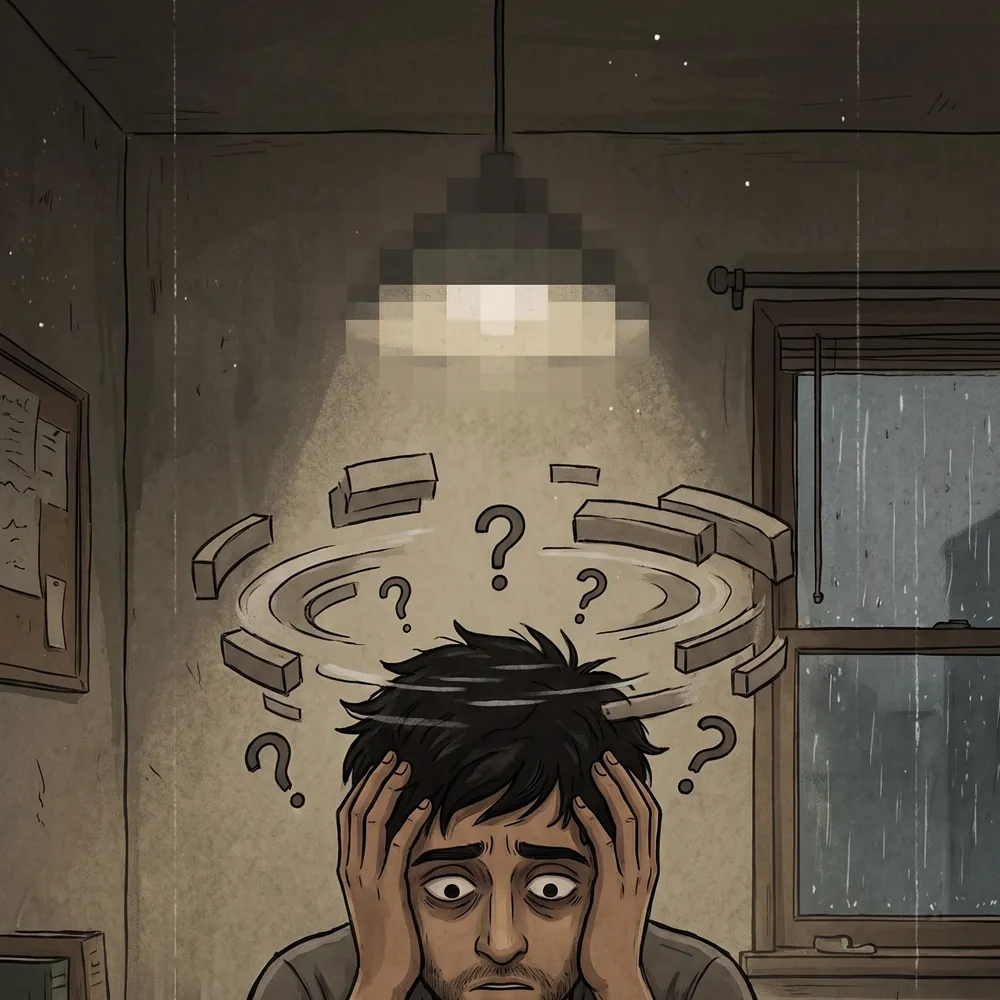
Not in the way the headlines mean. The popular version says your brain's capacity for sustained attention has been damaged or has shrunk. The better evidence supports a narrower claim: people now switch between screens and tasks more often, and some studies link heavy short-video use with poorer scores on attention measures, though none of them shows that the video caused it.
Three claims do most of the work in this debate, and they deserve to be treated separately because they are very different in quality. The first is a statistic with no real source. The second is a real measurement that is routinely misread. The third is recent, large and genuinely interesting, and also easy to overstate.
Where does the eight-second goldfish figure come from?
It traces to a 2015 report from Microsoft Canada that said average attention had fallen from twelve seconds to eight in little more than a decade, and compared that unfavourably with a goldfish at nine. The figure was not new research. The report attributed it to a statistics website, and when journalists asked that source for evidence, none could be produced.
Accounts differ on exactly how the number appeared in the report, and we would not rest anything on the detail of that. What is consistent across the sources we checked is the conclusion: there was no credible study behind it. Attention researchers rejected it, and one noted that average attention span is not something psychologists would even try to measure as a single number, because attention depends so heavily on the task and the person.
As for the goldfish, they do not have unusually short attention or memory either. The comparison was a flourish that made the statistic memorable, which is probably why it survived. A survey reported in 2022 found that about half of UK adults still believed the eight-second claim, years after it had been publicly corrected.
If you take only one thing from this section, take this: any article that opens with eight seconds is asking you to trust a number nobody can source.
What does the 47-second figure actually measure?
This one is real research, which is exactly why it is worth reading carefully. Gloria Mark, a researcher at the University of California, Irvine, has spent years observing how people use screens at work. As she has described it in interviews and in her book, the average time people stay on one screen before switching has fallen from about two and a half minutes in the early 2000s to about 75 seconds, and then to roughly 47 seconds in more recent data.
Notice what is being measured. It is how long someone stays on a screen before moving to another, which is a measure of behaviour in a particular environment. It is not a measure of how long that person is able to concentrate. Plenty of people who switch every minute can still read for an hour when the circumstances call for it. The figure describes how work has come to be organised, with more windows, more alerts and more reasons to look elsewhere, and says nothing about a damaged brain.
One caution about sourcing. We could trace the broad pattern, but not all three figures to a single dated, peer-reviewed paper, since they come largely from her interviews and book. Treat the exact numbers as approximate and the direction as well supported. We covered a related misreading in the 23-minute interruption myth, where a widely quoted number turned out to describe something different from what people think.
What did the 2025 meta-analysis on short video find?
This is the most recent and the largest piece of evidence. A 2025 paper in Psychological Bulletin by Nguyen and colleagues, "Feeds, Feelings, and Focus", pooled studies of short-form video use. Coverage of it describes 71 studies and nearly 100,000 participants. The authors report that heavier short-form video use was associated with poorer attention and inhibitory control, as well as weaker scores on some measures of memory and language.
That is a real finding from a serious journal, and it deserves to be taken seriously. It also comes with limits that the authors themselves point out, and that matter a great deal for how you read it.
- It shows association, not cause. Many of the studies were cross-sectional, taking one snapshot. People who struggle with attention may simply be drawn to short video, so the arrow could run either way.
- The platforms differ from the ones you use. According to the coverage we read, the studies concerned mainly TikTok, its Chinese counterpart and short video in general. None looked directly at Instagram Reels, Facebook Reels or YouTube Shorts.
- The people are not a typical founder. Reports describe participants averaging around 23, and nearly three-quarters of the studies were run in Asia. Whether the pattern holds for an executive in their forties is not something this paper can tell you.
- Compulsive use mattered more than hours, in at least one summary. Several accounts suggest that how out of control the use felt was more telling than how long it lasted. That fits with the idea that the useful question is whether you chose the time.
A caution about our own sourcing: we read summaries of this paper and its citation record, not the full text. If it matters to you, read the paper itself.
So what can be said honestly?
Put the three together and a fairer statement emerges.
- There is no good evidence that human attention span has collapsed to eight seconds. The statistic has no source.
- People do switch screens more often at work than they used to. That is a measured change in behaviour, and it has a clear environmental explanation.
- Heavy short-video use is linked with poorer attention scores in a large body of studies. The direction of cause is unknown, and most of the evidence is not about the apps you are likely to use.
None of that is a reason for alarm, and none of it is a reason to dismiss the concern. It is a reason to treat attention as something shaped by habit and surroundings, which is much better news than a damaged capacity. Habits and surroundings can be changed.
Why does the distinction matter in practice?
Because the story you believe decides what you do. If you think your attention has been damaged, the sensible response is resignation: it has gone, and a few clever tricks might patch it. If you think your habits have shifted, the sensible response is to change the habits, and that is something people have done for as long as there have been habits.
The first story is also quietly convenient for the products that sell the fix. A damaged capacity needs a rescue, and rescues can be sold. A habit needs a change of surroundings, which is less glamorous and usually cheaper. We would rather you chose the explanation that fits the evidence, even when it is the less dramatic one.
There is a further practical point. People who believe their attention is broken often stop trying to read or think at length, which removes the very practice that would let them settle in. Treating it as a habit keeps the option of getting better open.
How can you check your own attention?
Skip the online attention tests, which mostly measure how you perform on a particular game. A better check is behavioural, and you can run it in a week.
- Choose something long and worth reading: a chapter, a report, a long article. Twenty to thirty minutes.
- Remove the easy exits. Phone in another room, notifications off, one tab.
- Notice what happens at minutes five to ten. Most people feel a pull to check something. That is the habit, not a limit.
- Try again on three days. If you can settle in on the second or third attempt, your capacity is intact and your habits were doing the damage.
If you genuinely cannot sustain attention even in good conditions, and it is affecting your work or life, speak to a professional. An article cannot assess that, and conditions such as ADHD are real and treatable.
Where does a content blocker fit in all this?
If your concern is a habit of reaching for short video, then removing the short-video feed addresses the part of the problem you can change. It does not claim to repair anything, and it does not need the attention-span story to be true.
Qlean's Strict level closes Reels, Shorts and Spotlight and leaves the rest of each app usable. Standard closes adult content and leaves everything else alone. If you are wondering why the feed is so hard to put down in the first place, our piece on why you cannot stop watching Shorts explains the design behind it.
Change the habit, not the headline
On Strict, Qlean closes short video and leaves messages, search and the rest of each app working. Standard closes adult content and leaves everything else alone.
Qlean is a distraction blocker for Android. It closes the so-called entertainment that eats your attention: time-consuming Reels and Shorts, endless feeds, adult content and porn, the moment they open on your phone. No willpower needed. It never records your screen and keeps no record of what you view.
Get Qlean on Google Play